
About All Tours From Taormina ToursSummit ToursWine from Taormina ToursFrom Catania ToursWine ToursJeep ToursHiking ToursFrom Palermo ToursHalf Day ToursSunset Tours Directions Hours & Fees
Find Tours 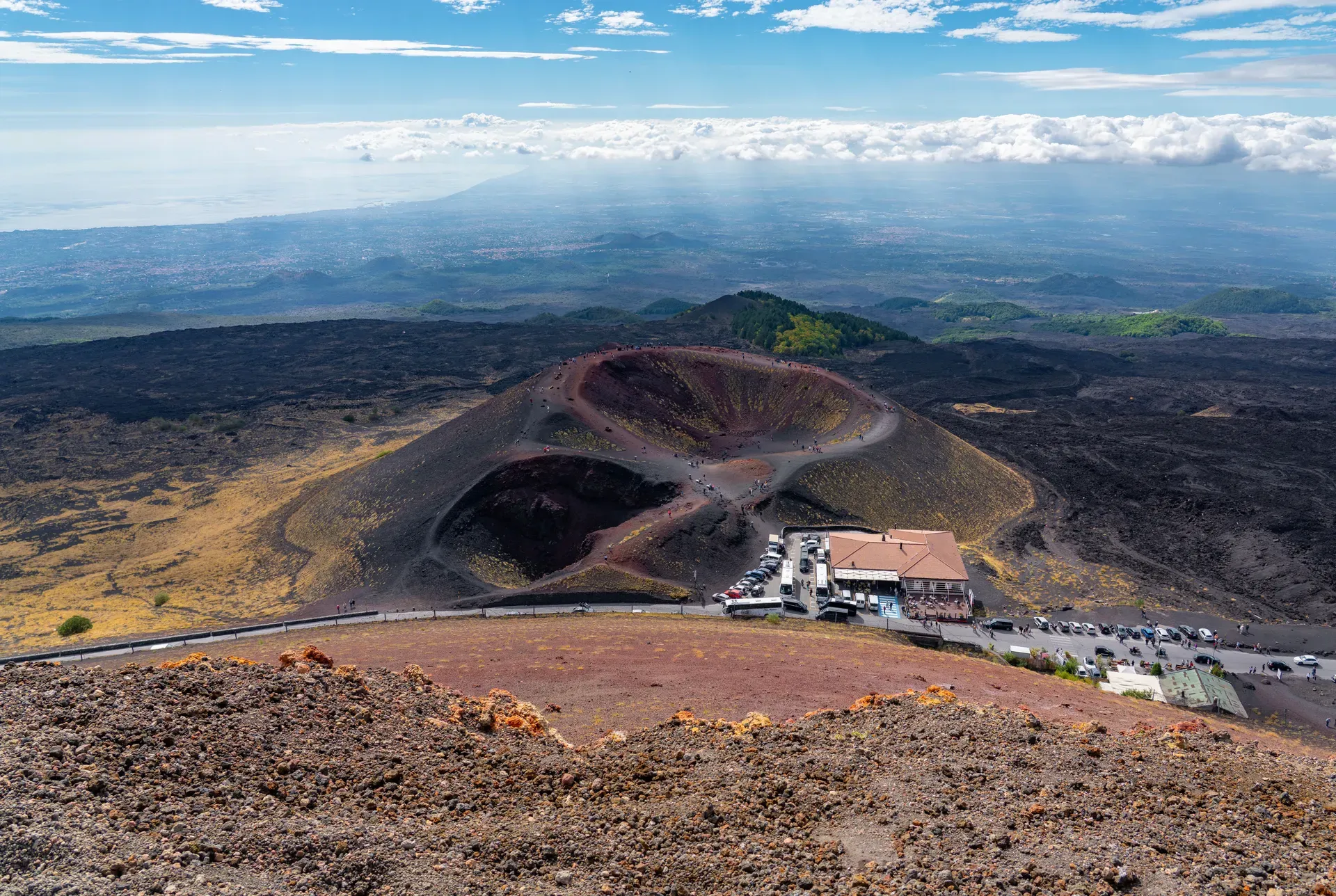
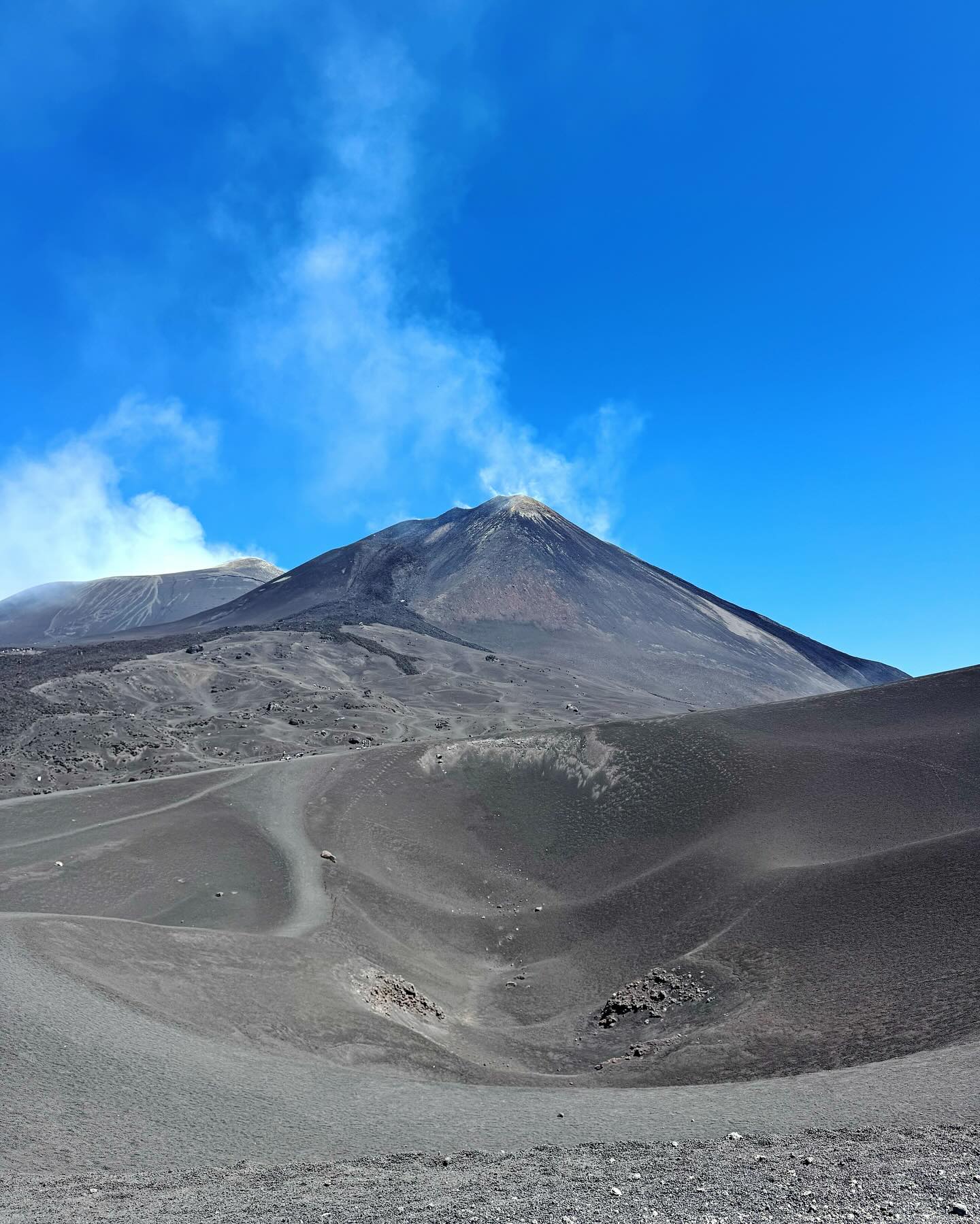
Rising up to 3,403 meters from the Ionian Sea, Mount Etna features four active summit craters and a landscape of ancient, solidified black lava flows. Visitors can take a cable car to 2,500 meters or join an authorized guided trek to the 3,300-meter active vents to observe geothermal warmth and steam emissions.
Find Guided ToursMount Etna is a massive, active composite stratovolcano located on the northeastern coast of Sicily. Rising directly from the Ionian Sea, it is Europe's highest and most active volcano, with an elevation that fluctuates between 3,320 and 3,403 meters due to ongoing summit eruptions and crater wall collapses. The mountain dominates the regional landscape, covering an area of 600 square miles with a base circumference of 93 miles.
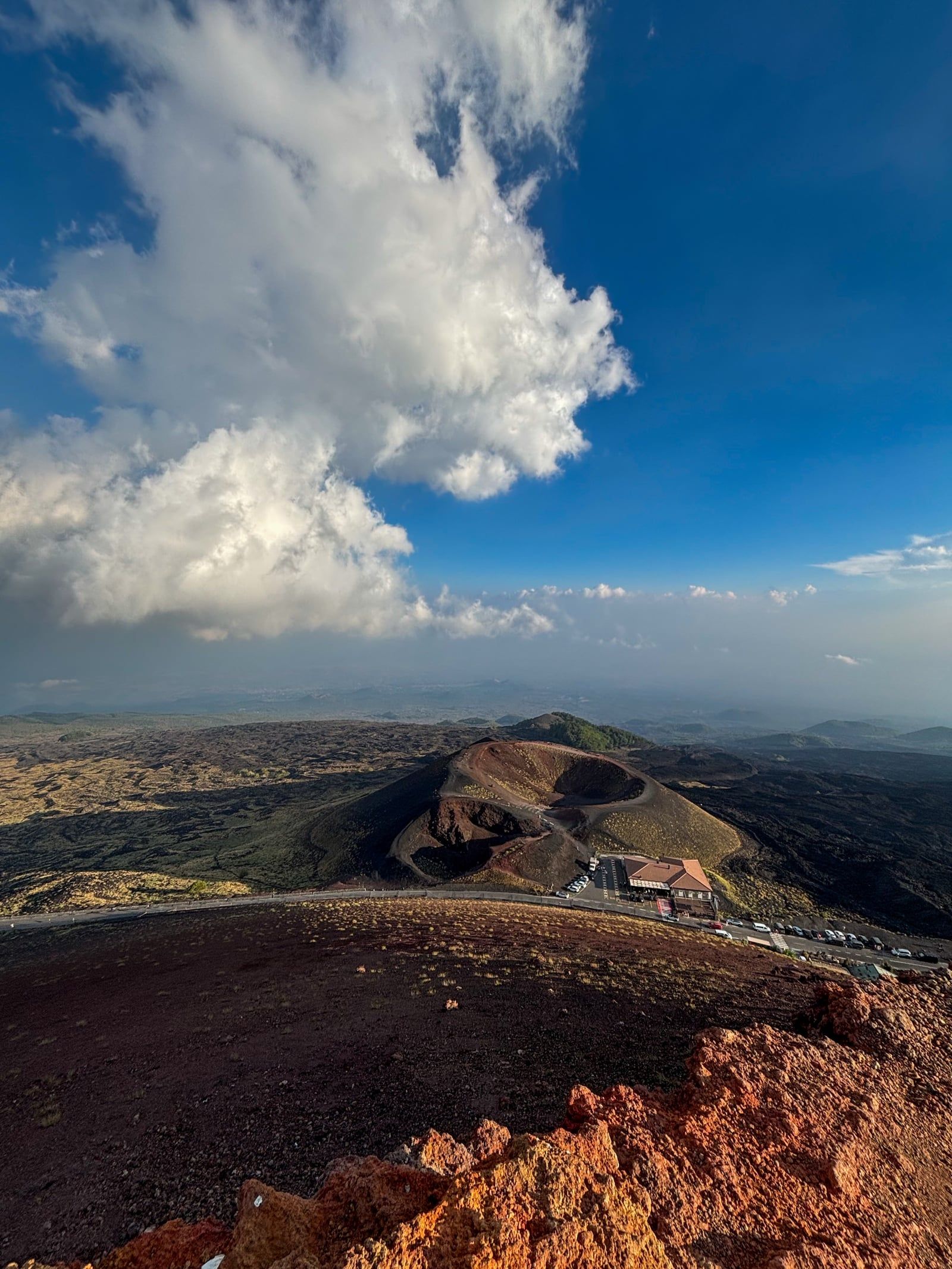
The volcano features a complex geological structure consisting of nested stratovolcanoes, four active summit craters, and hundreds of lateral vents. A defining physical characteristic is the Valle del Bove. This 14-square-mile horseshoe-shaped caldera formed 8,000 years ago following a massive flank collapse, leaving behind towering cliffs that rise over 3,280 feet high. Today, it acts as a natural catchment basin for slow-moving basaltic lava flows. The surrounding terrain also contains over 200 subterranean caves carved by ancient lava.
Etna holds one of the world's longest documented records of historical volcanism, stretching back over 3,500 years. The earliest recorded eruption occurred in 1500 BCE, and the volcano has erupted more than 190 times since. In 122 BCE, a massive ash plume blocked the sun and caused such extensive damage to the nearby city of Catania that the Roman government suspended local taxes for a decade.
The most devastating event took place in March 1669, when lava flows breached Catania's city walls, killing approximately 17,000 residents and leaving another 27,000 homeless. In the twentieth century, a rapid flank eruption in 1928 completely destroyed the town of Mascali in just two days. Due to this exceptional level of ongoing geological activity, Mount Etna was designated a UNESCO World Heritage Site in 2013, solidifying its status as a critical location for global volcanological research.
Discover the full history and cultural significance on our About page.
Reaching the active summit craters at 3,300 meters requires a challenging four-to-five-hour trek accompanied by a licensed guide. At the top, hikers stand beside Europe's highest active vents, surrounded by thick sulfur clouds and the deep rumbling sounds of the living volcano.
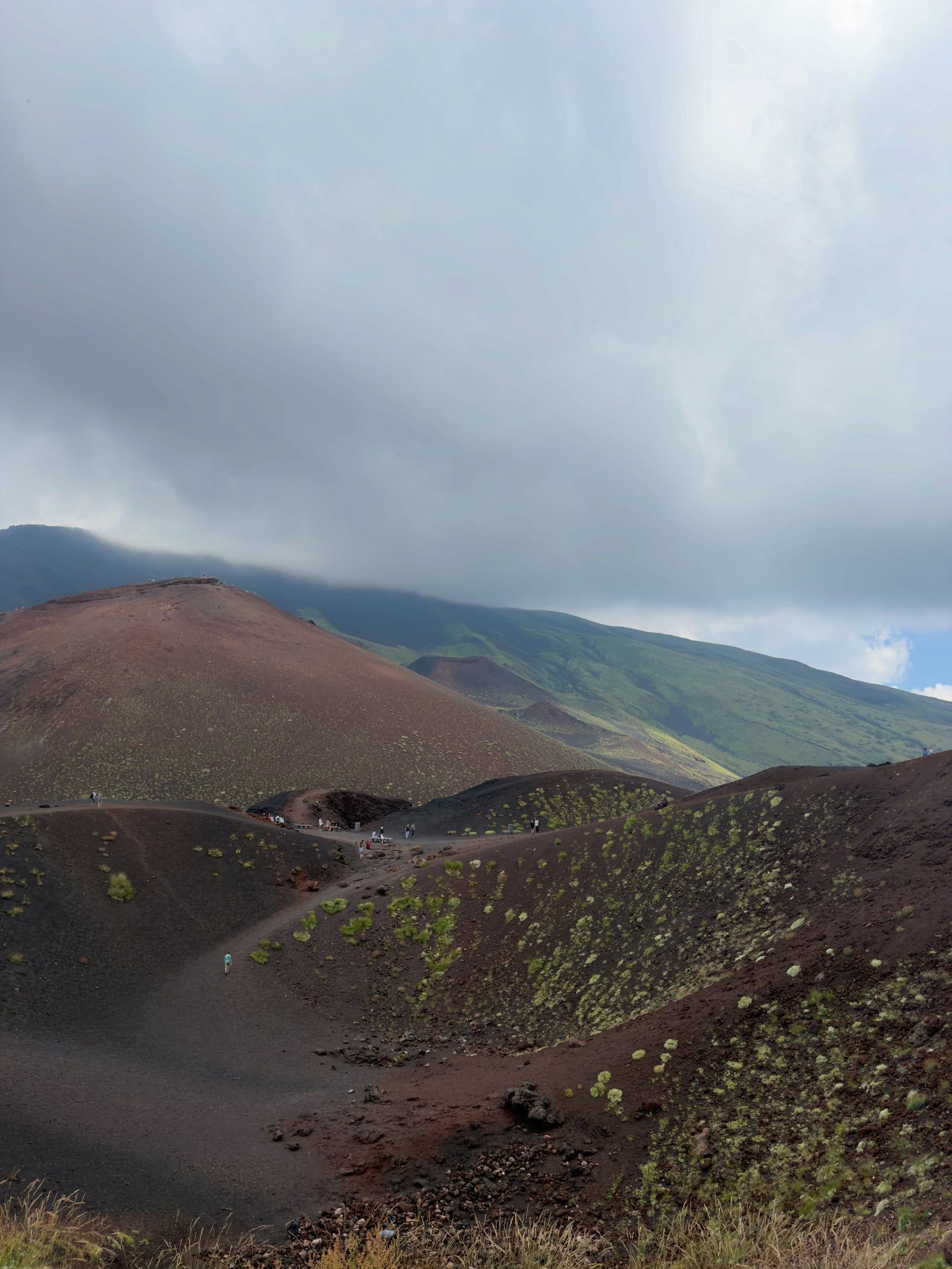
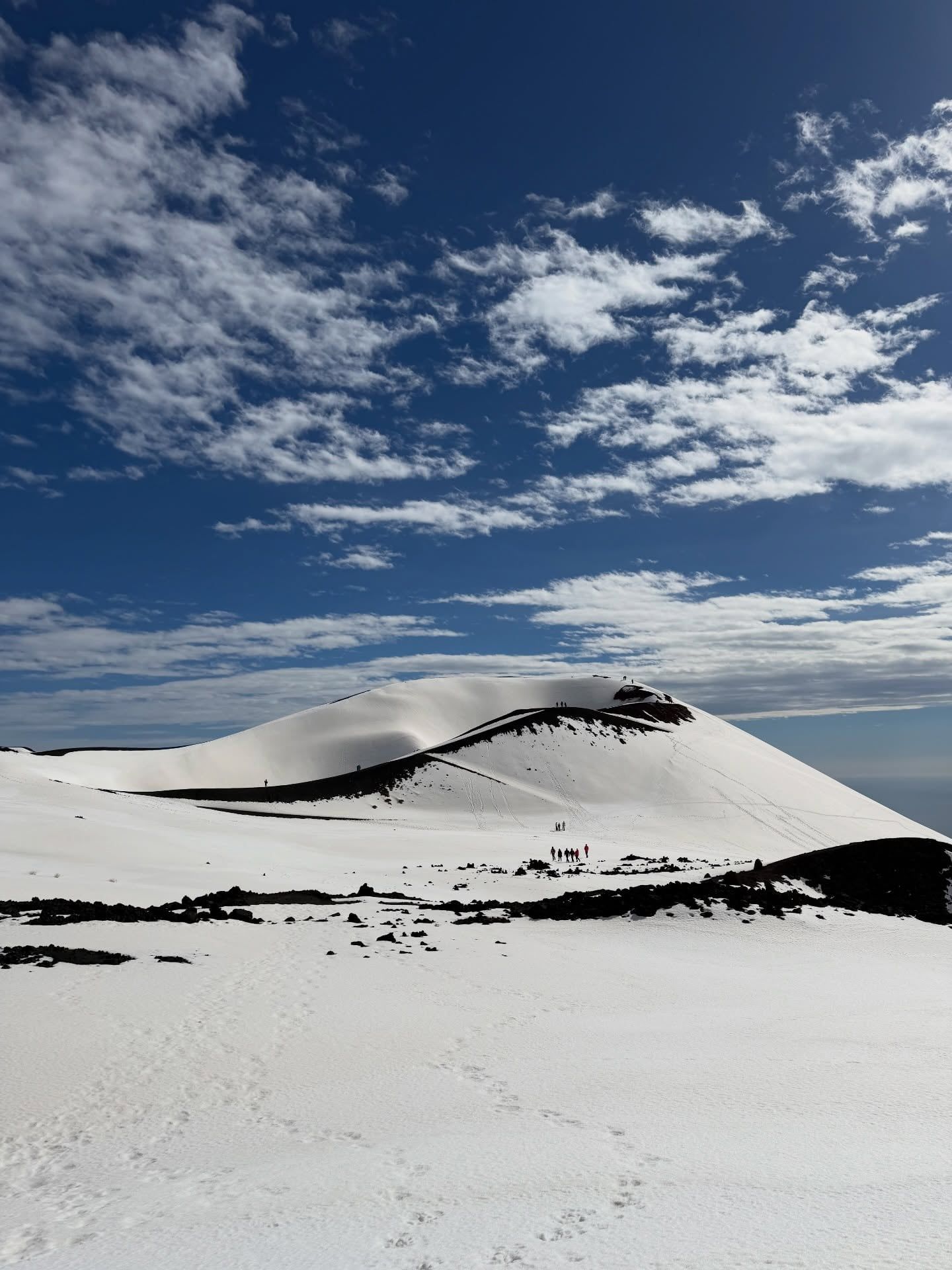
Take a rugged 4x4 minibus up to 2,920 meters to walk along the rims of the Barbagallo Craters. Formed during the massive 2002-2003 eruption, this high-altitude landscape still features active steam vents and geothermal warmth radiating directly from the solidified black lava.
This massive, horseshoe-shaped caldera spans 14 square miles across the eastern slope. Formed by a flank collapse 8,000 years ago, the depression features towering cliffs rising 3,280 feet high. It serves as a vast natural catchment basin for spectacular, slow-moving flows of molten basaltic lava.
Mount Etna features over 200 subterranean tunnels formed by ancient flowing lava. Equipped with helmets and flashlights, visitors can walk inside dark grottos like the Serracozzo. Deep within the cool volcanic rock, delicate speleothems and fascinating geological formations remain perfectly preserved.
Hand-picked tours with free cancellation and verified reviews
 Free Cancellation 6h
  Free Cancellation 6h
  Free Cancellation
  Free Cancellation 5h
  Free Cancellation 6h 30min
  Free Cancellation 8h
  Free Cancellation 7h
  Free Cancellation 7h
 The optimal time to visit Mount Etna is from June to September when the weather is warmer and skies are generally clearer. Morning visits are crucial during these high-season months to avoid midday clouds and fog at the summit.
Spring requires comfortable sportswear and sun protection, though March remains freezing with snow. Scheduled cable car maintenance occurs in April and May 2026, requiring 4x4 bus replacements.
These high-season months offer the warmest temperatures and clearest skies, making them ideal for stargazing and summit treks. Arrive early in the morning before midday fog and clouds gather.
September provides excellent clear weather, but conditions deteriorate rapidly by November with freezing temperatures. The cable car typically closes for annual maintenance between mid-November and early December.
Upper slopes are heavily covered in snow and temperatures frequently drop below freezing, requiring mandatory heavy winter jackets. While challenging for hiking, active ski resorts operate on both mountain flanks.
The base areas of Mount Etna and the Parco dell’Etna are public outdoor spaces with no official closing hours. The Etna cable car operates daily, including Sundays and public holidays, with seasonal variations. During the high season (approximately June to September), it opens at 8:30 AM and closes at 5:30 PM, with the last ascent at 4:30 PM. In the low season (approximately October to June), hours shift to 8:45 AM to 4:00 PM, with the last ascent at 3:15 PM. Winter season (December to March) hours are 9:00 AM to 4:00 PM. The cable car typically closes for annual maintenance from approximately November 15 to December 10. In 2026, scheduled maintenance will close the cable car from April 8 to 24 and May 5 to 20, replacing the service with 4x4 buses.
| Category | Price |
|---|---|
| General Base Access | Free |
| Cable Car to 2,500m (Adult) | €50 (€53 as of August 2025) |
| Cable Car to 2,500m (Child) | €30 (€28 as of August 2025) |
| Cable Car to 2,500m (Child 0-4) | Free |
| All-inclusive tour to 2,900m (Adult) | €82 |
| All-inclusive tour to 2,900m (Child 5-10) | €51 |
| Summit guided trekking tour to 3,300m | €80 - €130 per person |
Booking combined cable car and 4x4 bus tickets online in advance provides a priority voucher, allowing you to bypass the main ticket queue via a dedicated office door at Rifugio Sapienza.
For complete schedules and ticket prices, visit our Hours & Fees page.
Visitors can reach Mount Etna's primary access points on the north and south slopes by bus, car, or a scenic railway from Catania. The south side at Rifugio Sapienza serves as the main staging area for high-altitude excursions.
📍 Northeastern coast of Sicily, Italy
The AST public bus provides a daily connection from Catania to the south side of the volcano. Departures leave from the eastern side of Piazza Giovanni XXIII at 8:15 AM and arrive at Rifugio Sapienza by 10:15 AM. The route includes a 30-minute scheduled stop in Nicolosi. Passengers should queue 45 to 60 minutes early to secure a seat. The return service departs the mountain at 4:30 PM.
Driving provides direct access to both the northern and southern staging areas of the volcano. Travelers heading to the south side can follow the SP92 highway straight to the Rifugio Sapienza parking area. To reach the north side, drivers take the Strada Regionale Mareneve toward Piano Provenzana. This 35-kilometer route from Catania takes about an hour.
The historic Circumetnea railroad departs from the Borgo metro station in Catania and circles the entire base of the mountain. This scenic rail route offers a comprehensive view of the Etna National Park landscape. It is strictly a sightseeing transit option rather than an ascent route, as it does not climb the volcano. The full circuit takes three hours.
For detailed transport options and routes, visit our Directions page.
The daily AST public bus from Catania to Rifugio Sapienza departs at 8:15 AM from Piazza Giovanni XXIII. Purchasing a €6.60 round-trip ticket in advance does not guarantee you a seat. Get to the stop 45 to 60 minutes early to secure your spot for the two-hour ride.
Temperatures on the volcano plummet by 6 to 7°C for every 1,000 meters of elevation gained. The summit can hover near freezing even when the coast reaches 30°C in August. Bring sturdy hiking boots, long trousers, and a windproof jacket year-round to handle the sharp gravel and cold winds.
Schedule your cable car ascent for the early morning to ensure clear views. Thick clouds and dense fog consistently gather around the summit craters by midday. This weather shift can rapidly reduce visibility to near zero, making afternoon excursions far less rewarding and potentially disorienting.
Purchasing your combined €82 cable car and 4x4 bus ticket online provides a priority voucher to bypass long queues at Rifugio Sapienza. Before booking, verify the operational schedule. The cable car shuts down for annual maintenance from mid-November to early December, with additional closures planned for April and May 2026.
You cannot hike independently above the 2,500 to 2,800-meter safety limits. Reaching the active summit craters at 3,300 meters requires booking a licensed volcanological guide for a four to six-hour trek. Forestry police use drones to enforce these rules and monitor the strict 10-person maximum per guided group.
The rugged volcanic terrain does not exclude visitors with mobility limitations. The park maintains the Path of Germplasm, a dedicated trail built specifically for wheelchair accessibility. Staff can also arrange specialized big-wheel shower chairs, or you can book adapted private vehicles that drive up to 6,000 feet to view extinct craters.
Positioned high above the Mediterranean Sea, Taormina provides expansive coastal views and significant historical sites. You can walk through Piazza IX Aprile or examine the ruins of the ancient Teatro Antico.
This medieval town retains its ancient defensive walls and cobblestone streets, centered around the Cathedral of Santa Maria. It is highly regarded for artisan crafts and volcanic wines from estates like Donnafugata.
Situated on the volcano's lower slopes, Zafferana Etnea is the primary producer of local Etna honey. Visitors can tour nearby honey farms or dine on high-end volcanic cuisine at Sabir Gourmanderie.
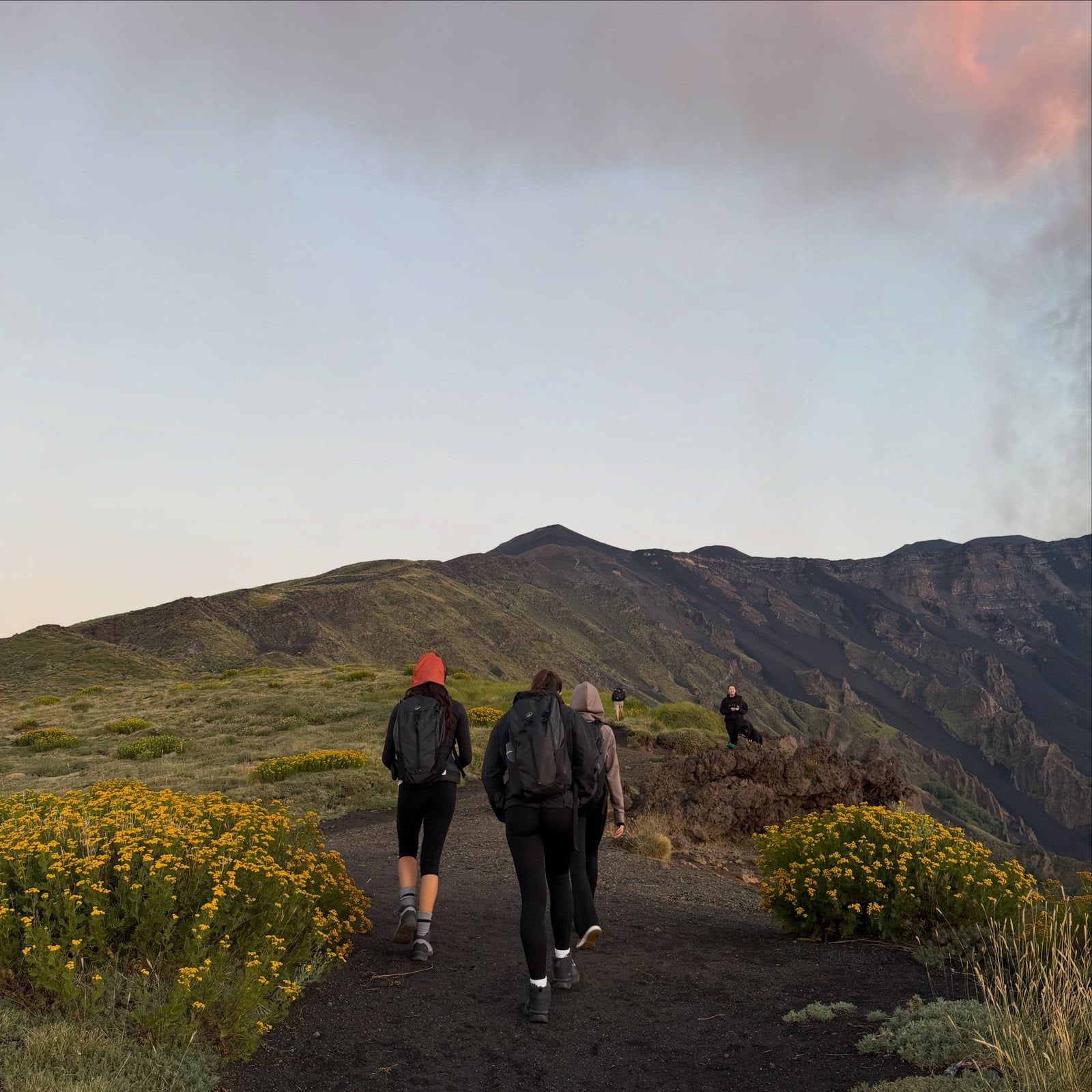
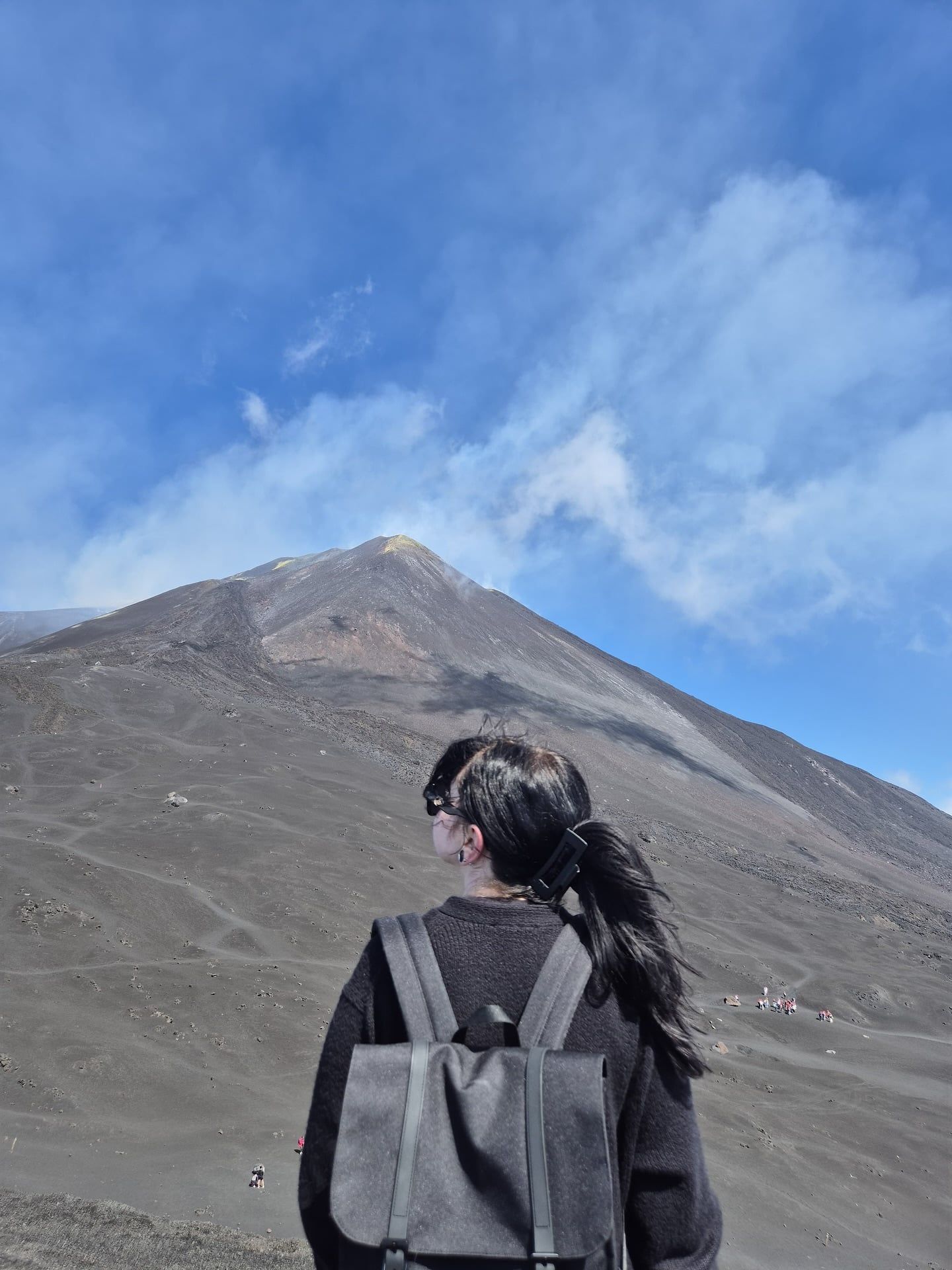
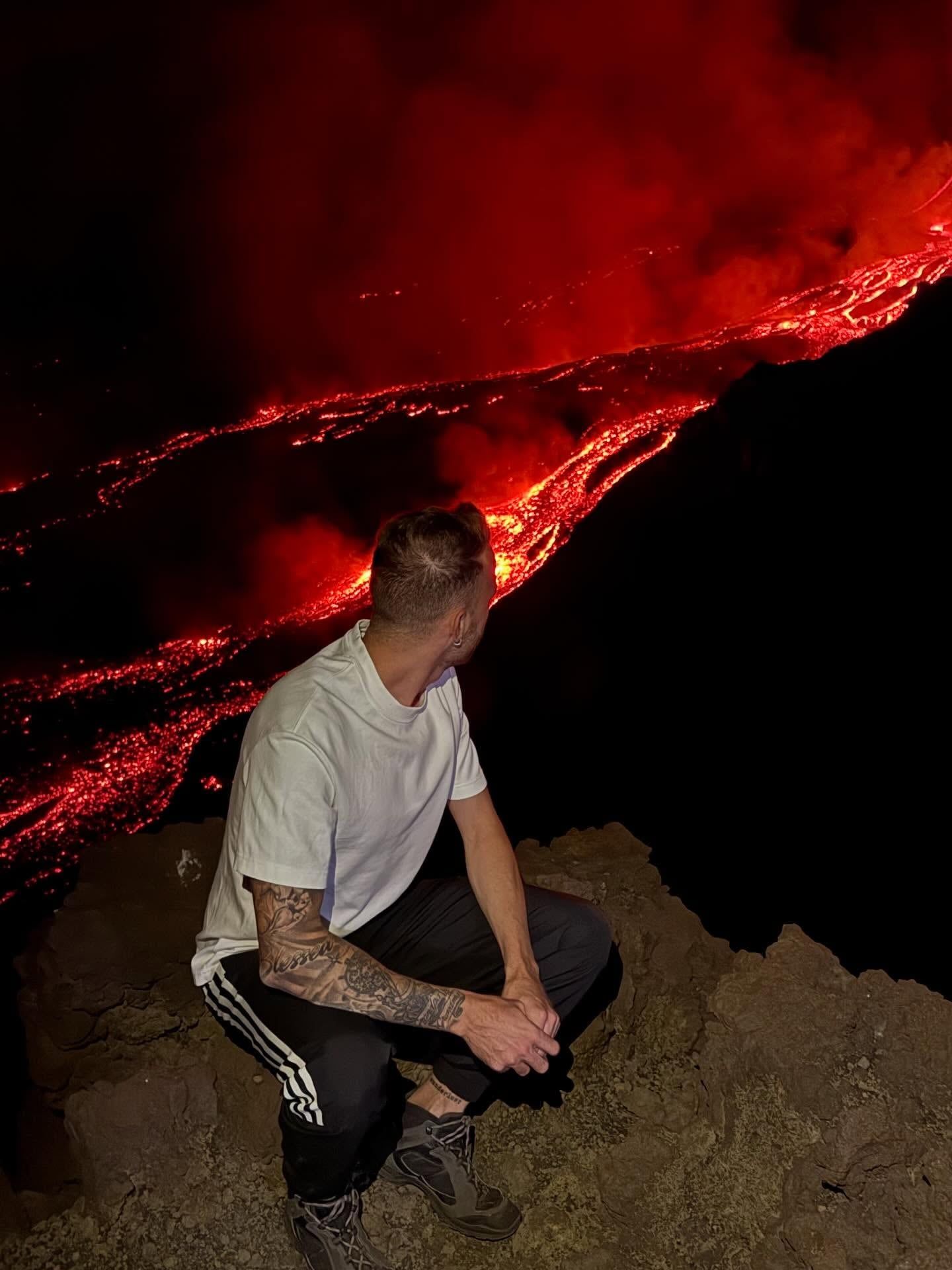
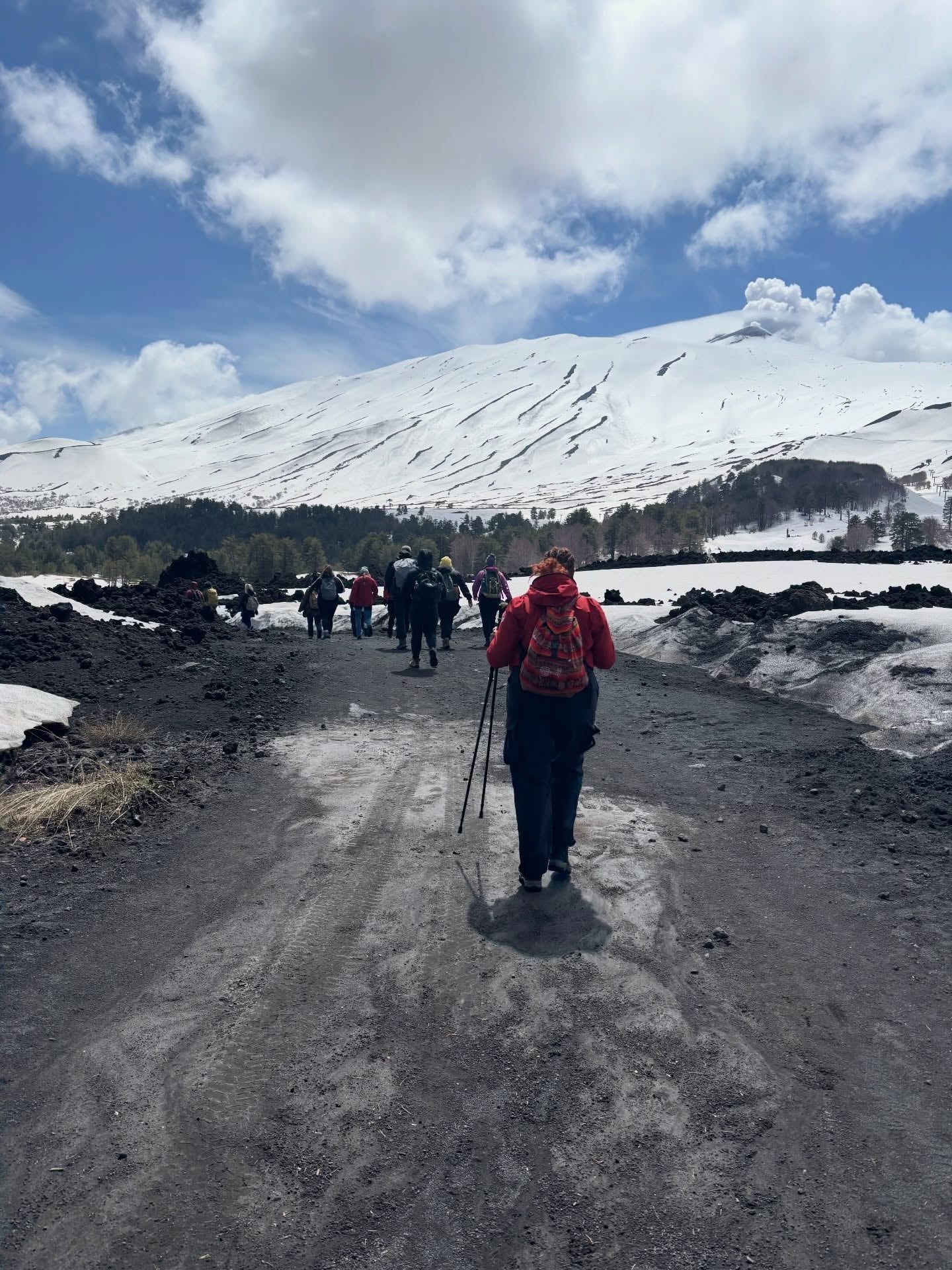
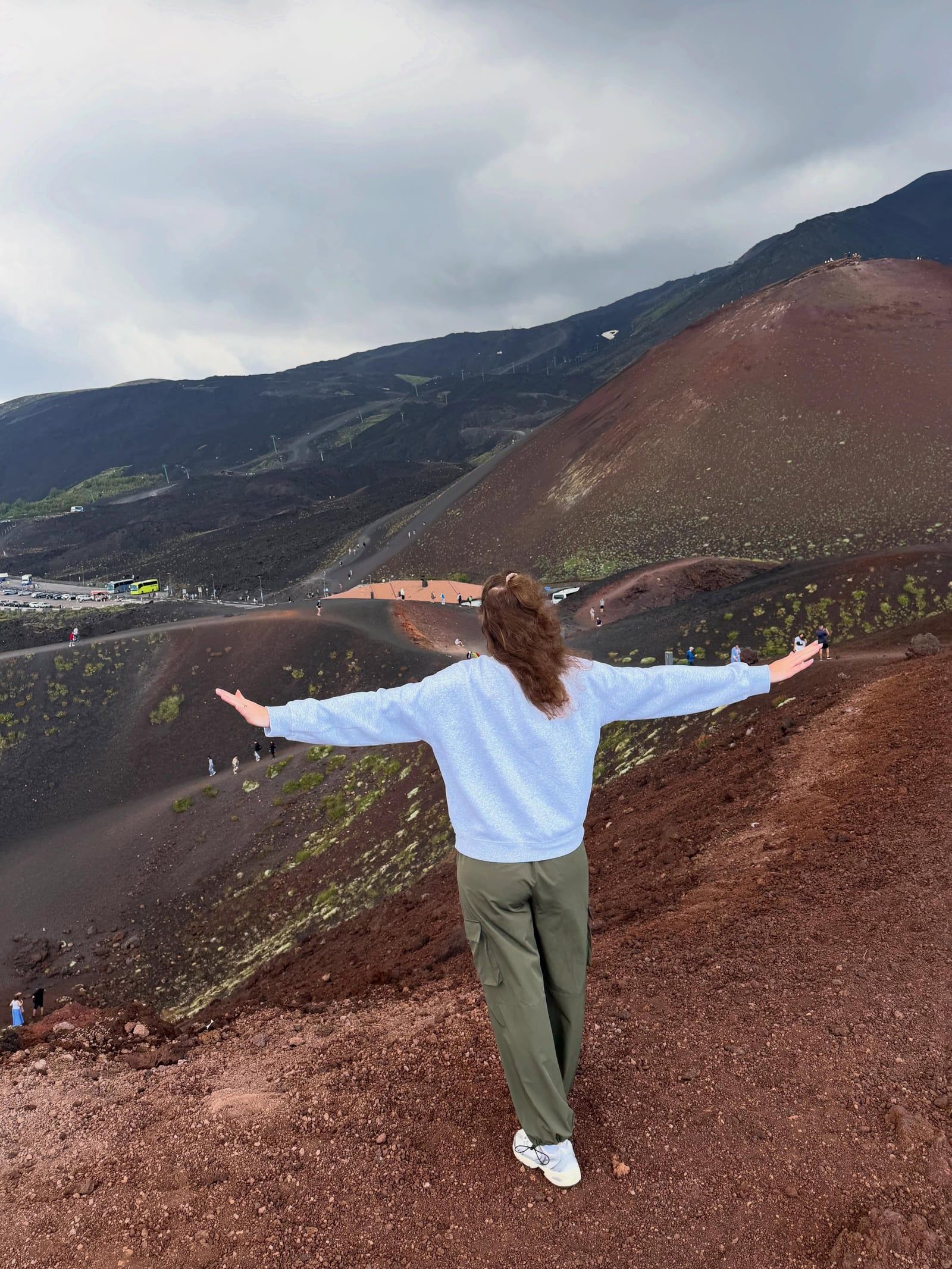
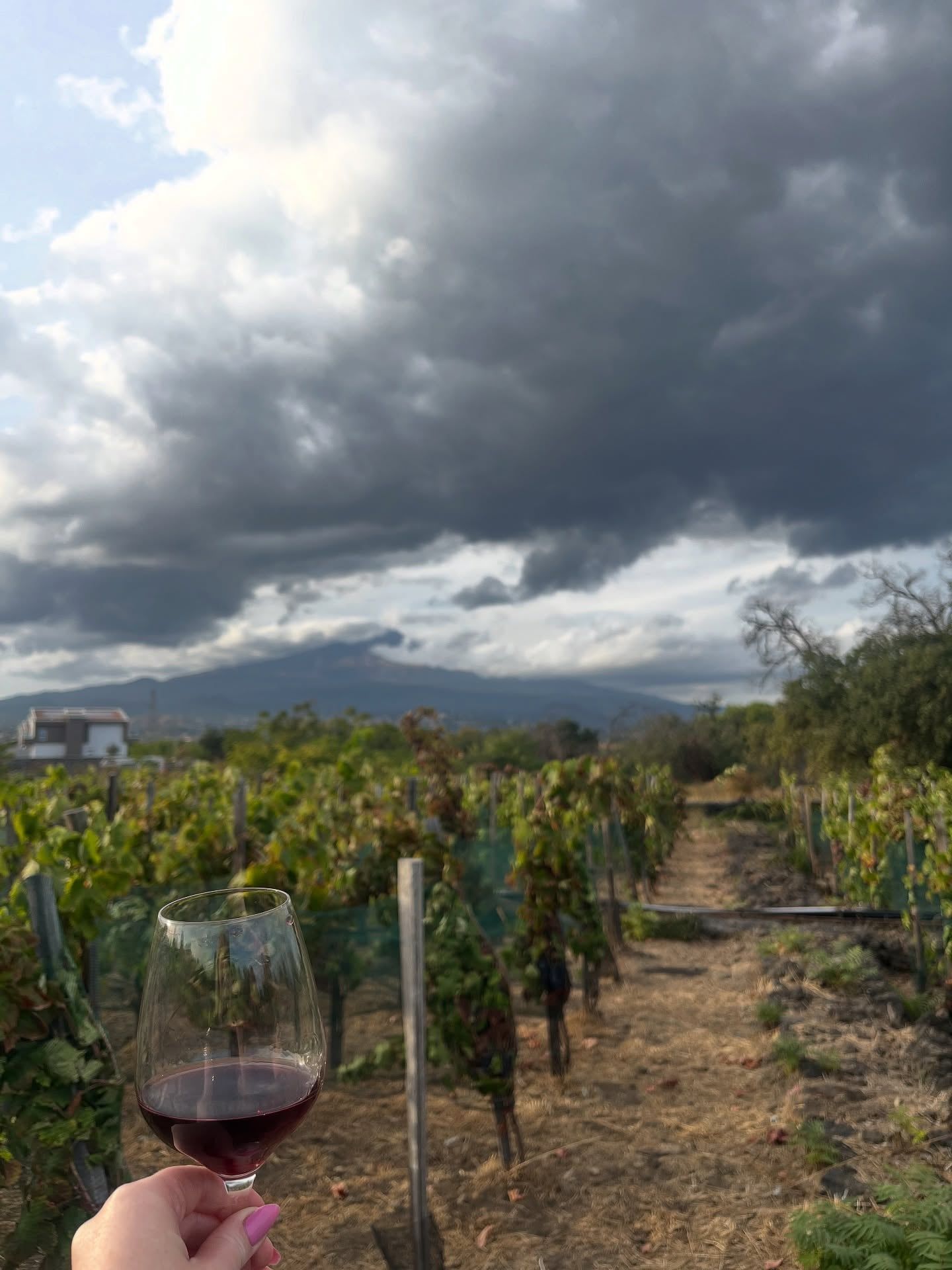
Read what travelers share about their experience visiting Mount Etna — from practical tips to personal highlights.
There is no entrance fee to access the base areas of Mount Etna. However, taking the cable car to 2,500 meters costs €50 for adults and €30 for children. If you want the all-inclusive cable car, 4x4 bus, and volcanological guide tour to 2,900 meters, expect to pay €82 for adults and €51 for children.
You can take the AST public bus, which departs daily at 8:15 AM from Piazza Giovanni XXIII in Catania and arrives at Rifugio Sapienza at 10:15 AM. A round-trip ticket costs €6.60, and the return bus leaves the mountain at 4:30 PM. Arrive at least 45 to 60 minutes early to secure a seat, as advance tickets do not guarantee a spot.
Visiting in the early morning is highly recommended for the clearest weather. Thick clouds and fog frequently gather around the summit craters by midday, significantly reducing visibility to near zero. During the high season from June to September, the cable car opens at 8:30 AM, making an early start easy.
Sturdy, closed-toe hiking boots with good grip are essential for walking on the loose, sharp volcanic gravel. You should also bring warm layers, a windproof jacket, gloves, and a hat, as temperatures drop by 6-7°C per 1,000 meters of elevation. Heavy winter jackets are mandatory if you visit from December to March.
No, unaccompanied hikers are strictly prohibited from climbing above the designated safety limit, which is typically between 2,500 and 2,800 meters. Reaching the active summit craters at 3,300 meters requires booking a licensed volcanological guide. These guided trekking tours cost between €80 and €130 per person and take about 4 to 6 hours.
Yes, visitors with physical disabilities can explore the volcano using the fully accessible 'Path of Germplasm' trail. Specialized wheelchair-accessible tours are also available in adapted private vehicles that climb to 6,000 feet above sea level to view extinct craters. Park staff can arrange specialized equipment, including big-wheel shower chairs.
While you can buy tickets on-site, booking your combined cable car and 4x4 bus tickets online in advance is highly recommended. Pre-booking provides a priority voucher that lets you bypass the long ticket office lines at Rifugio Sapienza via a dedicated door. Note that the cable car closes for annual maintenance from approximately November 15 to December 10.
A visit can range from a quick 1-2 hour self-guided walk around the lower Silvestri Craters to a full 4-6 hour summit trek. Taking the cable car and 4x4 buses to reach the 2,900-meter mark typically takes 3 to 4 hours. Plan your schedule carefully, as recent safety ordinances require all excursions to end before sunset.
Browse verified tours with free cancellation and instant confirmation.
Find Tours