About All Tours From Taormina ToursSummit ToursWine from Taormina ToursFrom Catania ToursWine ToursJeep ToursHiking ToursFrom Palermo ToursHalf Day ToursSunset Tours Directions Hours & Fees
Find Tours 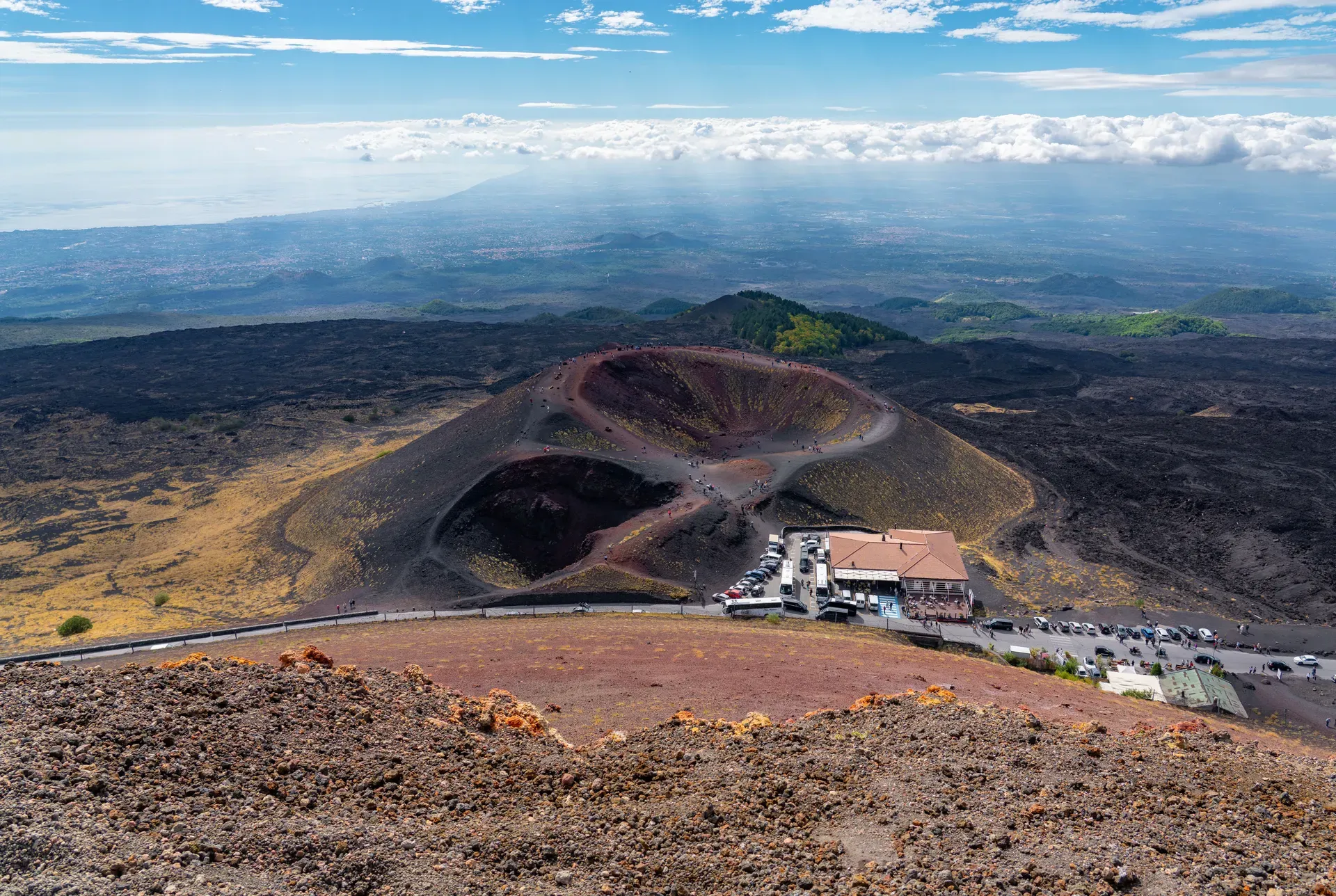
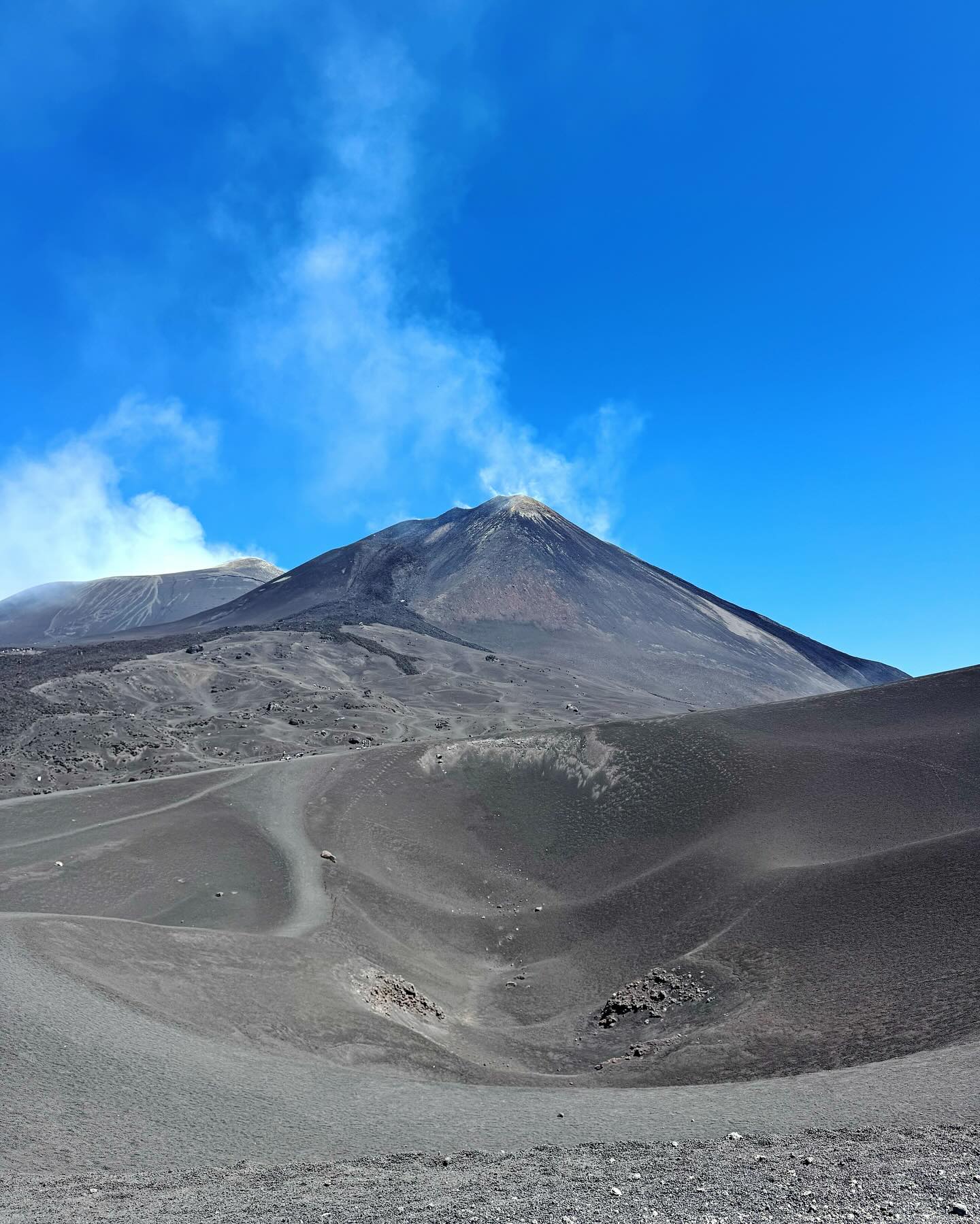
Four active summit craters and hundreds of lateral vents shape Mount Etna, a 3,403-meter stratovolcano rising directly from the Ionian Sea. This UNESCO World Heritage site draws scientists and hikers to its constantly changing basalt landscape.
Four active summit craters and hundreds of lateral vents shape Mount Etna, a 3,403-meter stratovolcano rising directly from the Ionian Sea. The mountain covers 1,600 square kilometers with a base circumference of 150 kilometers across the northeastern coast of Sicily. Steam and ash vent continuously into the sky from the highest peaks, while cinder cones scar the lower slopes. This constant geological activity earned the site a UNESCO World Heritage designation in 2013.
Visitors experience three distinct ecological zones during an ascent. The lower slopes support vineyards and orchards rooted in mineral-dense volcanic soil. Higher up, dense forests of chestnut, beech, oak, and pine cover the middle elevations. Above 2,000 meters, the vegetation vanishes entirely. The upper zone presents a barren, wind-scoured landscape of black volcanic ash, sharp slag, and solidified lava flows.
Reaching the higher elevations requires planning and adherence to strict safety protocols. The Funivia dell’Etna cable car lifts passengers from 1,900 meters to 2,500 meters in ten minutes. From there, 4x4 buses transport groups to 2,900 meters near the Barbagallo Craters. Standing on the edge of the active summit craters at 3,300 meters demands a 4-to-5-hour trek with a licensed volcanological guide. Weather changes rapidly at this altitude. Thick fog often rolls in by midday, reducing visibility to zero, and temperatures drop 6-7°C for every 1,000 meters climbed. The cable car shuts down entirely for annual maintenance from mid-November to early December.
Humans have documented Mount Etna's eruptions for at least 2,700 years. This continuous written record makes the mountain a primary site for global volcanology research. The earliest recorded eruption occurred around 1500 BCE. Ancient historians later tracked major volcanic events in 479 BCE, 396 BCE, and 141 CE.
A massive eruption in 122 BCE demonstrated the volcano's destructive capacity. The resulting ash plume completely blocked the sun over the region. Heavy ashfall caused such extensive roof collapses and infrastructure damage in Catania that the Roman government suspended local taxes for ten years to fund reconstruction.
The seventeenth century brought the most lethal volcanic event in the mountain's documented history. In March 1669, a series of violent fissures opened on the lower slopes. Molten lava flowed steadily toward the coast, eventually breaching the defensive walls of Catania. The advancing rock killed approximately 17,000 residents and left another 27,000 homeless.
Twentieth-century activity shifted to sudden, devastating flank eruptions. In 1928, a fissure opened at a low elevation, sending a fast-moving lava flow directly into the town of Mascali. The entire settlement was obliterated in just two days. An eruption cycle spanning 2002 to 2003 reshaped the terrain around the 2,900-meter mark, creating the Barbagallo Craters.
Modern safety regulations prioritize human life over property. Following an eruption cycle that began on Christmas Eve 2025, authorities established a strict 200-meter exclusion zone around all active lava flows. Forestry police deploy drones to monitor these restricted areas and enforce a dusk curfew. Excursions must conclude before sunset, and guided groups cannot exceed 10 people.
Mount Etna operates as a complex structure of nested stratovolcanoes rather than a single, uniform cone. The mountain constantly changes shape and elevation due to material accumulation from eruptions and the periodic collapse of crater walls. Currently standing near 3,403 meters, the summit houses four distinct active craters that continuously vent toxic sulfur gases and ash.
The eastern flank features the Valle del Bove, a massive horseshoe-shaped caldera spanning 14 square miles. Formed by a catastrophic flank collapse 8,000 years ago, this depression acts as a natural catchment basin. Towering cliffs rise 3,280 feet high along its edges, exposing millennia of geological strata. Slow-moving flows of molten basaltic lava frequently pool in this vast basin during eruptive phases.
Beneath the surface, ancient lava flows have carved over 200 subterranean caves. The Serracozzo grotto exemplifies these formations, featuring long, tubular tunnels created when the outer layer of a lava flow cooled and hardened while the molten core drained away. Delicate speleothems and distinct rock textures line the walls of these dark, cool passages.
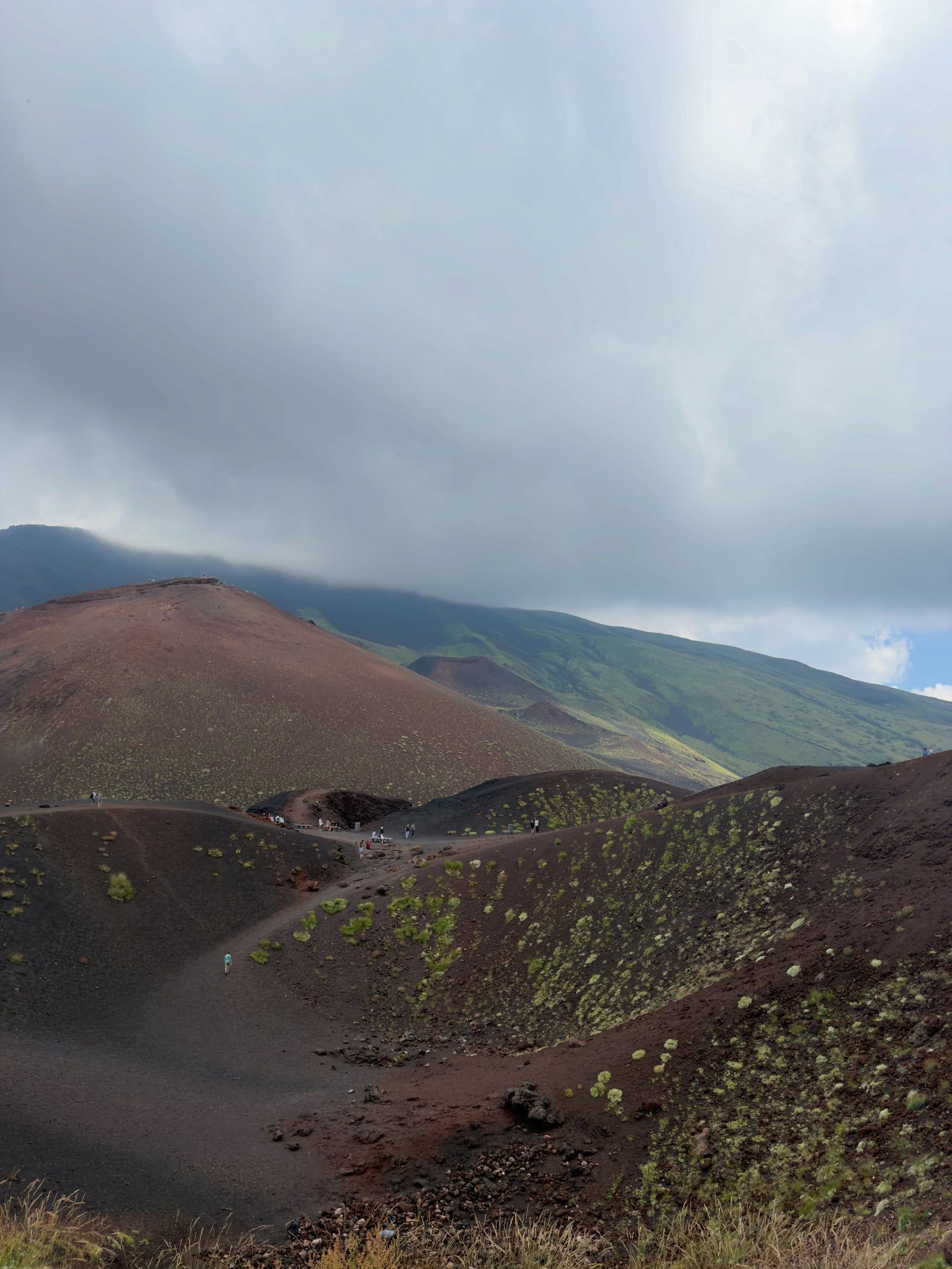
The lower slopes contain hundreds of extinct lateral vents and cinder cones. The Silvestri Craters sit directly adjacent to the Rifugio Sapienza parking area at 1,900 meters. These extinct double craters allow visitors to walk along the rims, observing the stark contrast between black volcanic gravel and the distant blue waters of the Ionian Sea. Loose, sharp volcanic slag covers these trails, requiring sturdy, closed-toe hiking boots to navigate safely.
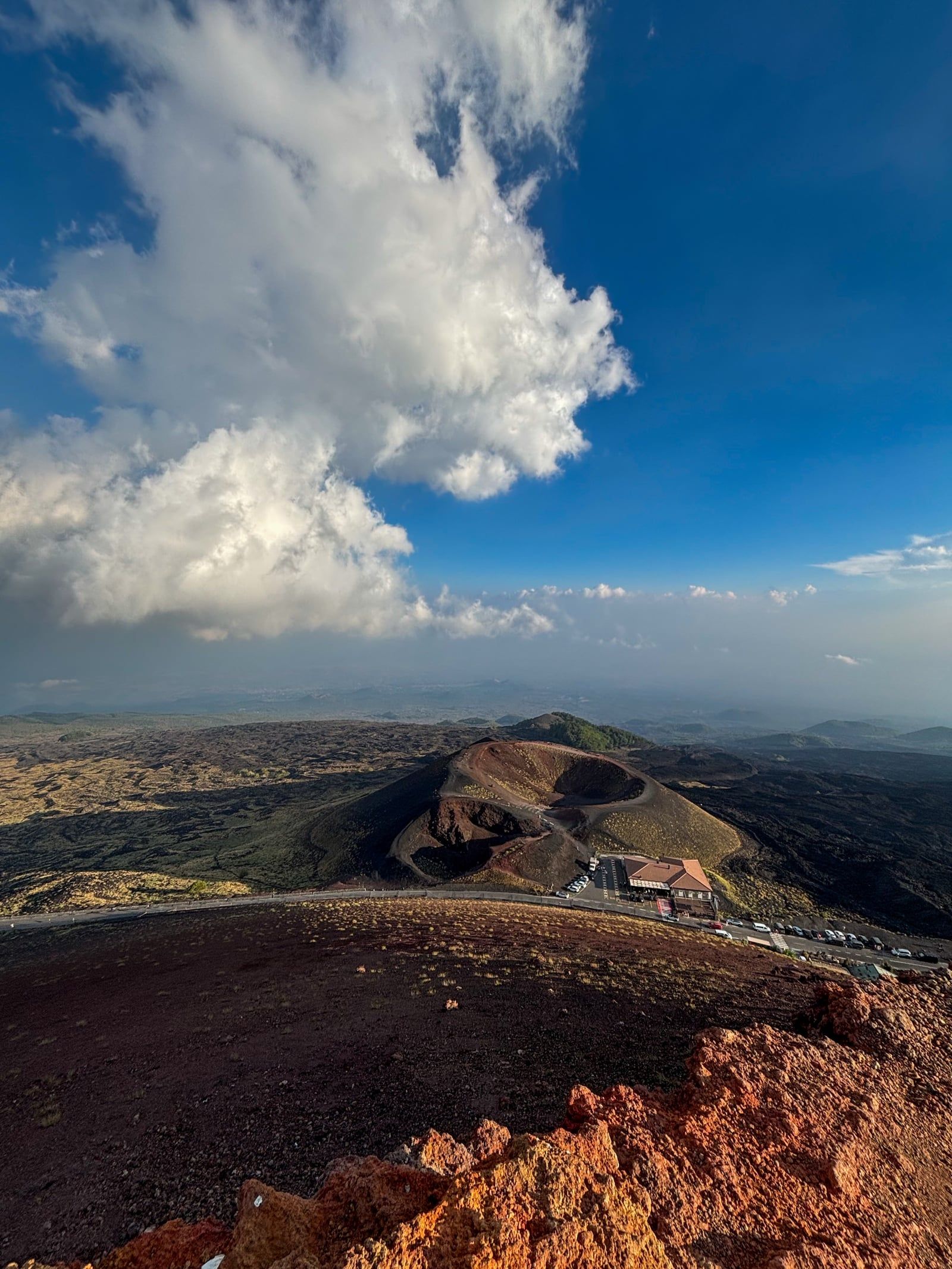
Mount Etna dictates the agricultural and daily life of eastern Sicily. The mineral-dense volcanic soil supports a specialized farming economy on the lower slopes. Local estates in towns like Randazzo and Linguaglossa produce highly rated Etna DOC wines, extra virgin olive oil, and hazelnuts. Zafferana Etnea, situated on the eastern flank, operates as a major hub for honey production.
The mountain's constant activity forces residents to adapt to regular disruptions. Heavy volcanic ash emissions frequently force the closure of Catania Fontanarossa Airport. Locals routinely sweep thick layers of black grit from their balconies and windshields. The historic Circumetnea railroad, departing from Catania's Borgo metro station, circles the base of the volcano, connecting these resilient slope communities along a three-hour scenic route.
Ancient Greeks and Romans integrated the volcano into their mythology. Classical writers identified Etna as the forge of Hephaestus and the prison of the deadly monster Typhon. Today, strict environmental laws protect the 19,237-hectare core area of the Etna National Park. Dogs are banned from the UNESCO World Heritage site to protect local wildlife, and unauthorized motor vehicles cannot enter the forest tracks.
Mount Etna's exact height fluctuates annually; it currently stands around 3,403 meters but changes as craters erupt and collapse.
A massive ash eruption in 122 BCE caused such severe roof collapses in Catania that Rome suspended local taxes for ten years.
The mineral-dense soil on the lower slopes supports a thriving wine industry, producing highly rated Etna DOC wines.
The historic Circumetnea railroad takes three hours to circle the base of the volcano, connecting small towns without climbing the slopes.
The town of Zafferana Etnea on the eastern slopes specializes in producing distinct volcanic honey.
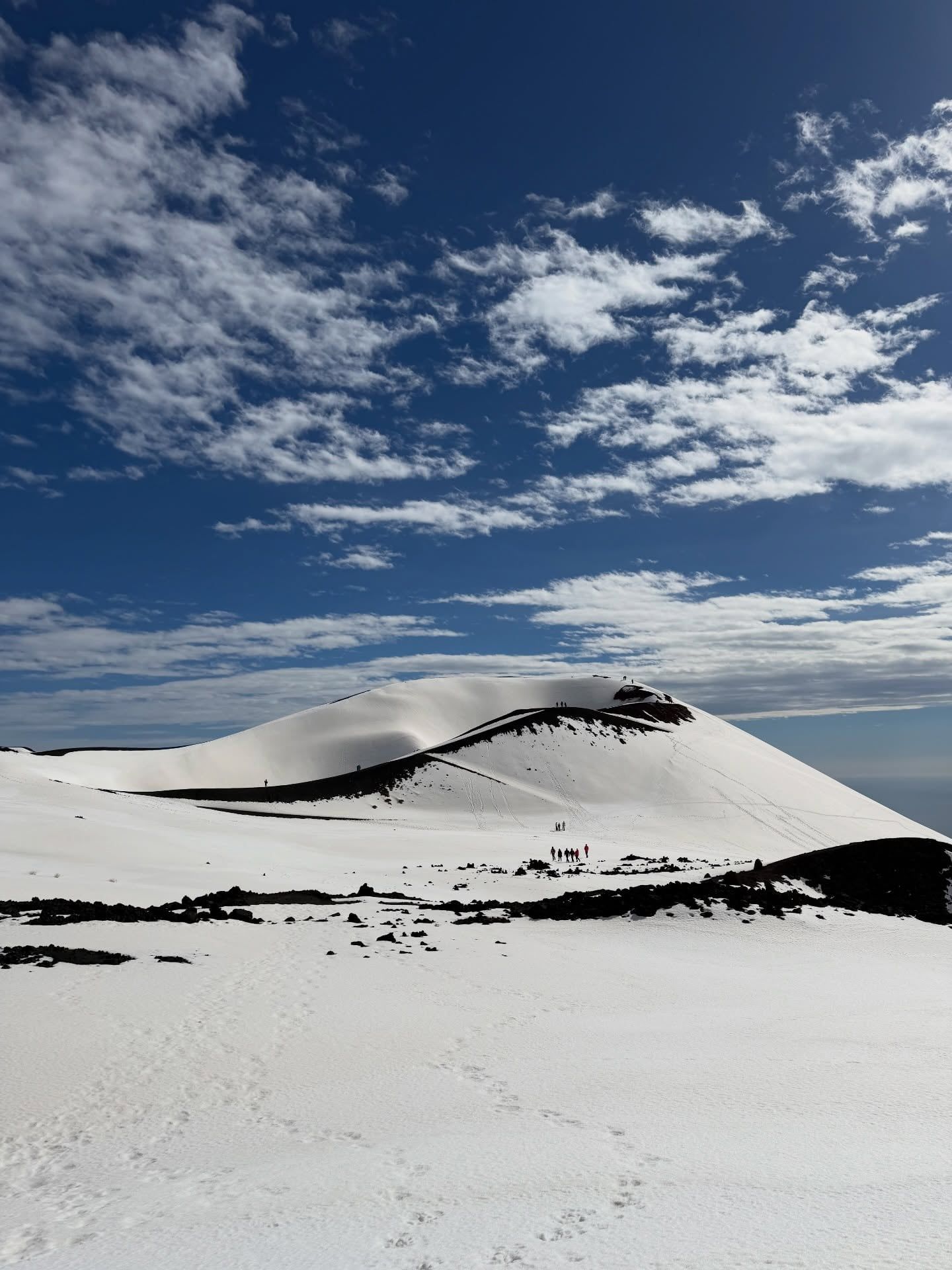
From December to March, visitors can ski on the volcano using active lifts and slopes at Nicolosi and Piano Provenzana.
During eruptive phases, authorities enforce a mandatory 200-meter exclusion zone around active lava flows, monitored by forestry police drones.
Mount Etna stands at an elevation of approximately 3,320 to 3,403 meters (10,900 to 11,165 feet). This measurement constantly changes as volcanic material accumulates and crater rims periodically collapse.
No. Hikers cannot climb above the designated safety limit, typically set between 2,500 and 2,800 meters, without an authorized guide. Reaching the active summit craters at 3,300 meters requires booking a 4-to-5-hour trek with a licensed volcanological guide.
A return ticket for the cable car to 2,500 meters costs €50 for adults and €30 for children. An all-inclusive ticket covering the cable car, 4x4 bus, and a guide to 2,900 meters costs €82 for adults and €51 for children.
In March 1669, a violent series of lava flows breached the city walls of Catania. This eruption killed approximately 17,000 residents and left another 27,000 people homeless.
A single daily AST public bus departs from Piazza Giovanni XXIII in Catania at 8:15 AM, arriving at Rifugio Sapienza at 10:15 AM. The round-trip ticket costs €6.60, and the return bus leaves the mountain at 4:30 PM.
Following recent eruptions, authorities established a 200-meter exclusion zone around active lava flows. All excursions must end before sunset, and guided groups are strictly limited to a maximum of 10 people.
Yes. The upper slopes accumulate heavy snow from December to March. Active ski resorts operate lifts and groomed slopes at Nicolosi on the south side and Piano Provenzana on the north side.
Mount Etna has a recorded history of volcanism stretching back over 3,500 years. Since 1500 BCE, the volcano has erupted at least 190 times, featuring near-continuous activity in recent decades.
The Valle del Bove is a 14-square-mile horseshoe-shaped volcanic caldera on the eastern slope. Its towering cliffs rise up to 3,280 feet, acting as a massive natural basin that catches slow-moving lava flows.
Dogs are strictly prohibited within the core property of the UNESCO World Heritage site to protect the local ecosystem. The Regional Corps of Forest Rangers actively enforces this ban.
Browse verified tours with free cancellation and instant confirmation.
Find Tours